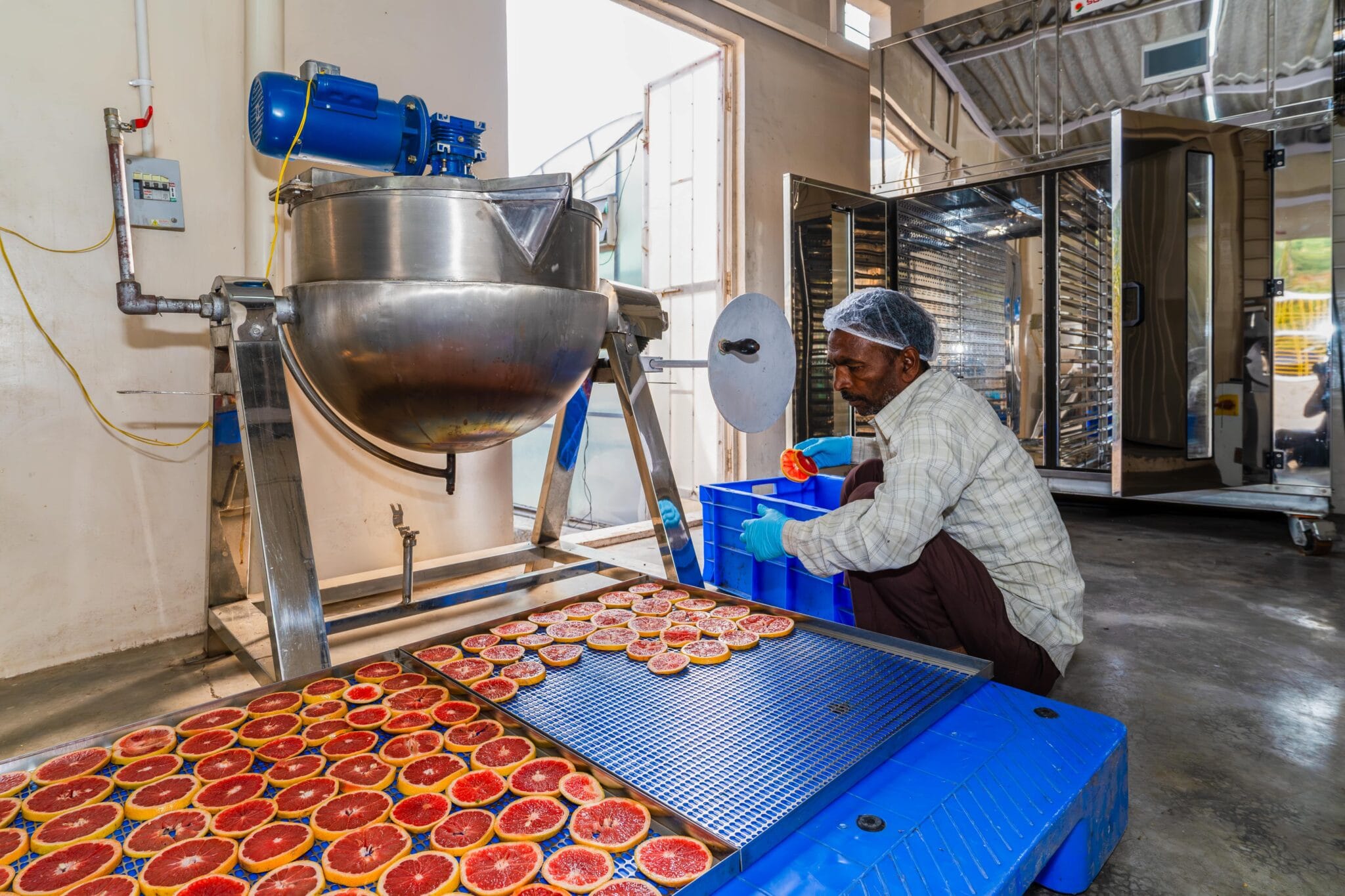
Earlier this week, Mirai Organics co-founder Saurabh Surana was invited to mentor a Dehydration Methods Training at Foodtech Pathshala in New Delhi. The room was full of food entrepreneurs, processors and people planning their first dehydration unit — and the brief was simple: explain how commercial drying actually works, without the sales pitch.
Rather than a textbook overview, the session drew directly on what we run every day at our facility in Panchkula, Haryana — the equipment, the trade-offs between drying methods, and the mistakes that cost new processors the most.
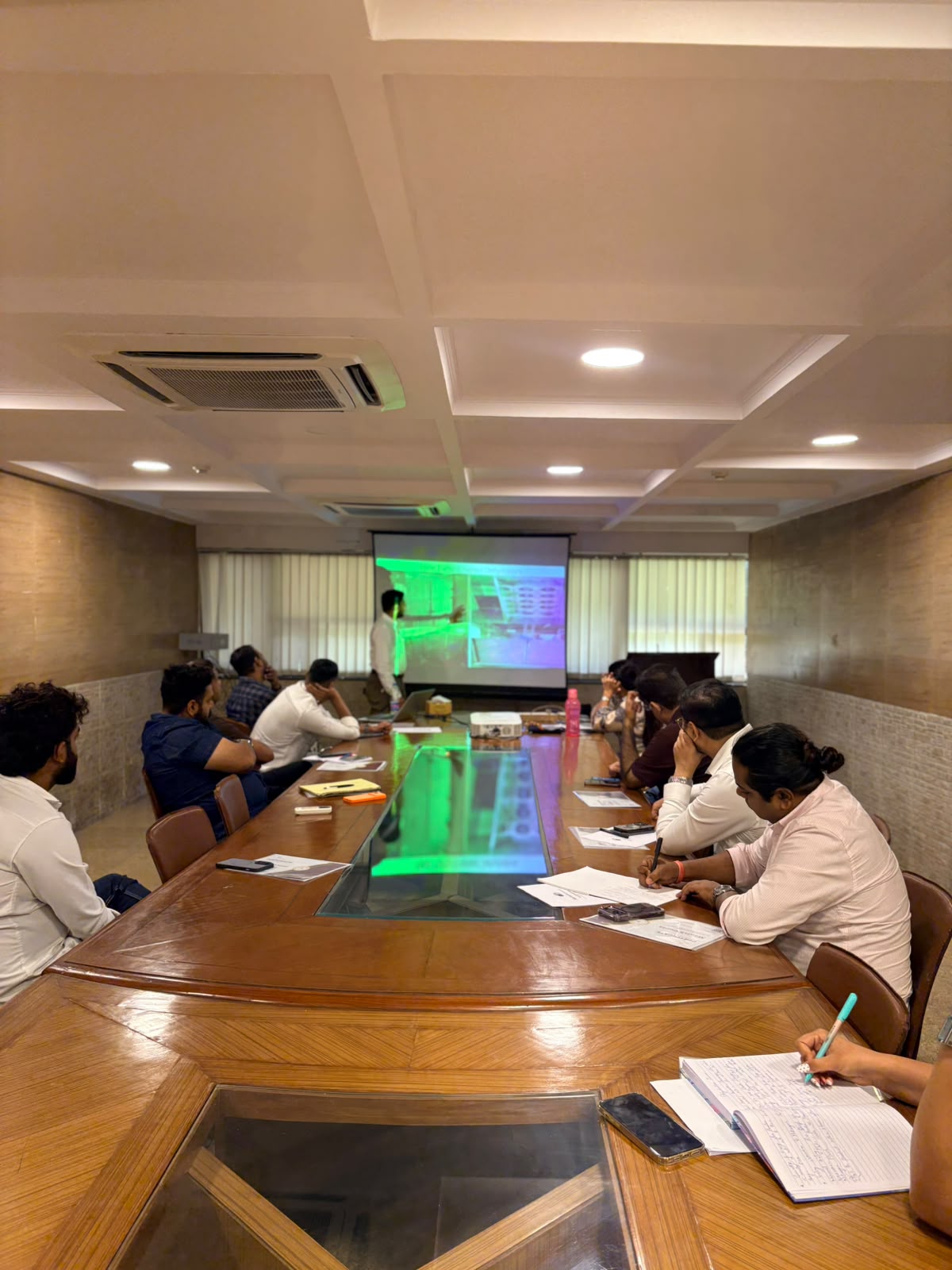
Heat pump enabled dehydrators
A large part of the session focused on heat-pump-enabled dehydrators. Unlike a basic hot-air dryer that simply vents moist air out, a heat pump system recovers heat from the extracted air and recirculates it. That gives far tighter control over temperature and humidity across the full drying cycle — which is what makes it possible to dry at a low, steady 50–55°C and still finish batches on schedule, even in humid weather.
Saurabh walked through photos of the heat pump units from our own floor — how the chamber is laid out, how airflow is routed across the trays, and why energy efficiency matters more than purchase price once a unit is running daily.
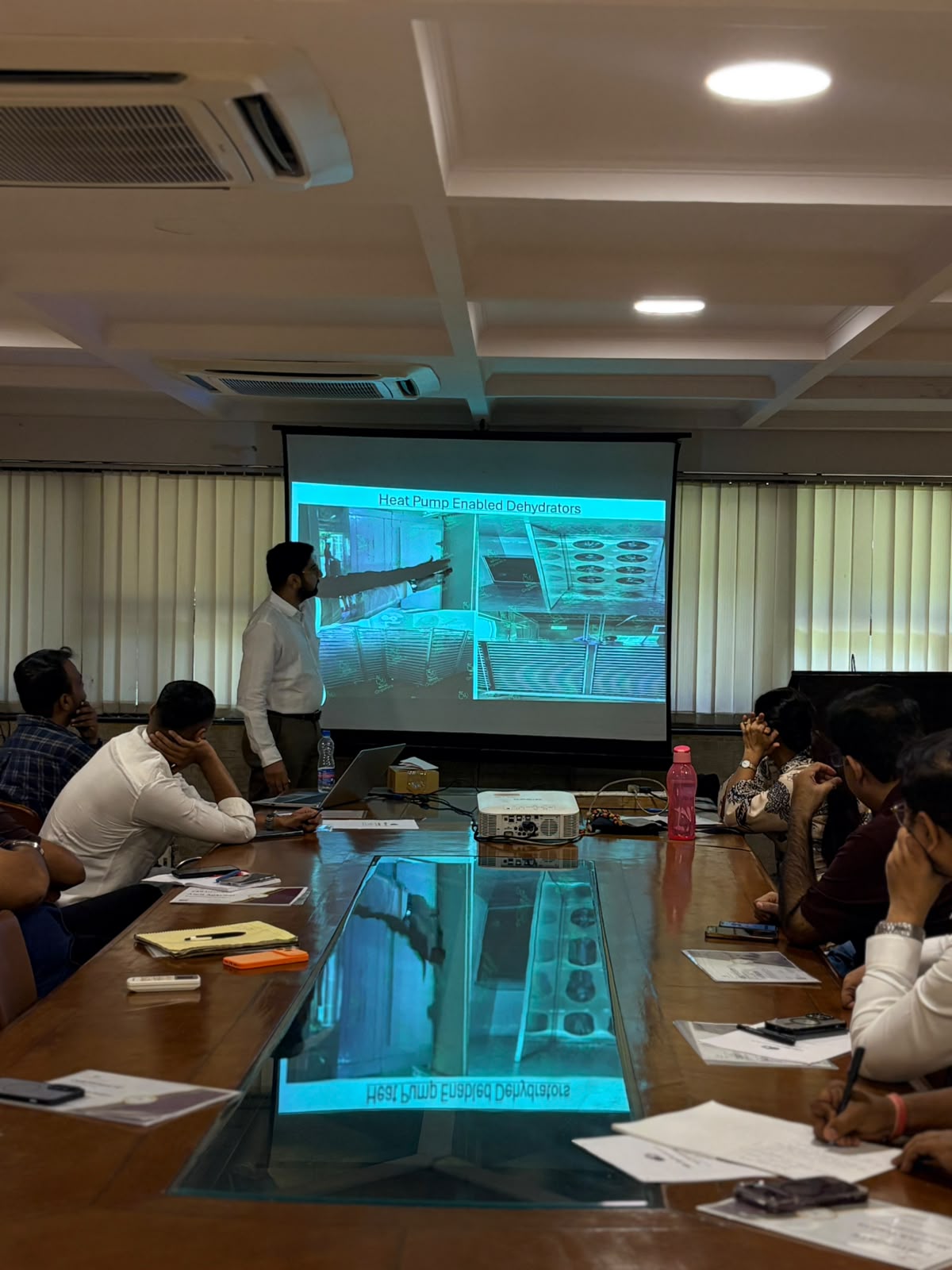
Electric heater based tray dryers
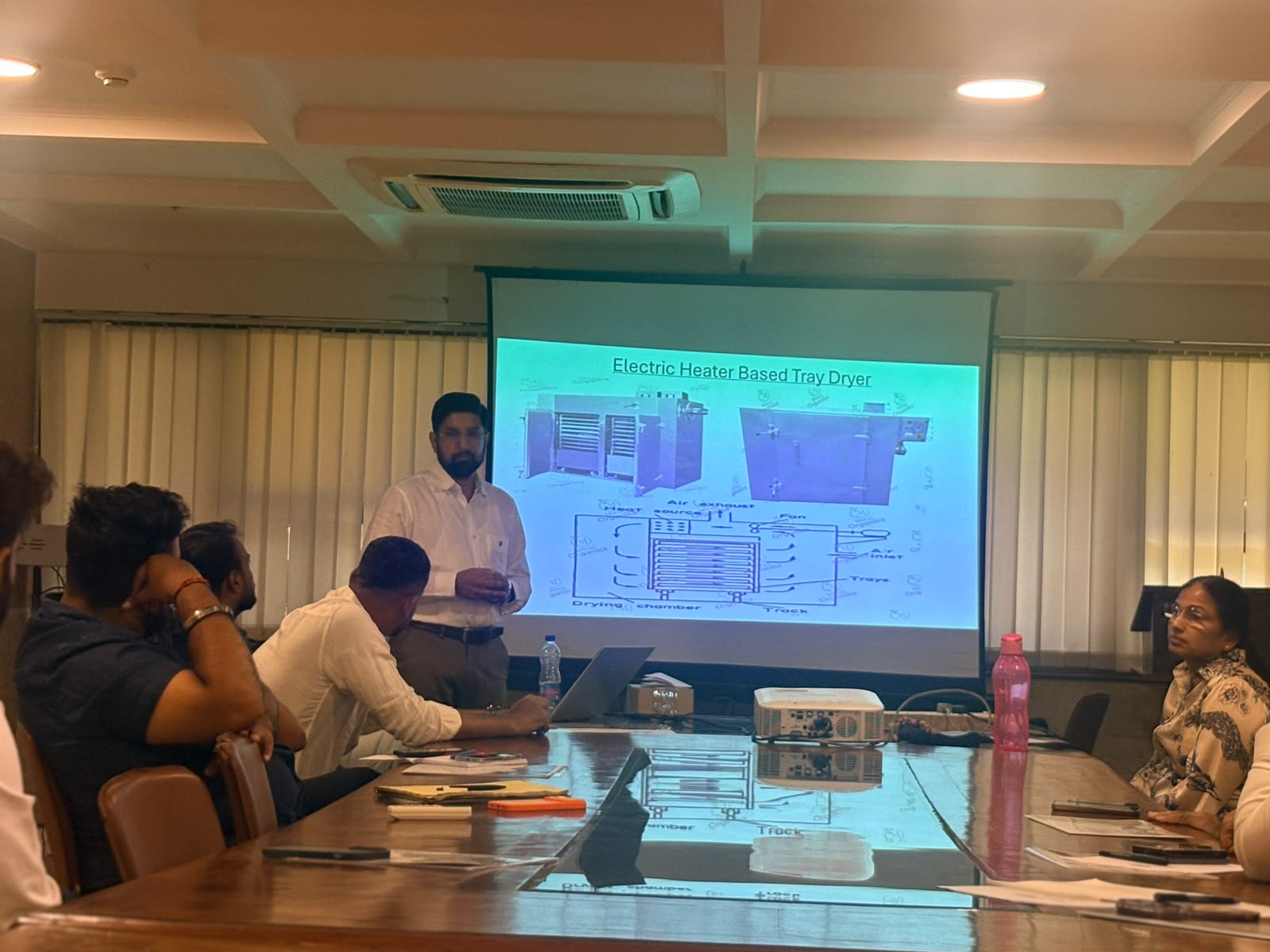
The second half covered the electric heater based tray dryer — the workhorse most small and mid-sized processors start with. Using a cross-section diagram, the session broke the machine down into its parts and how they work together:
- Heat source — electric heating elements that warm the incoming air
- Fan and air inlet — pulling in fresh air and driving it across the chamber
- Trays on a track — stacked mesh trays so hot air can pass evenly over every layer
- Air exhaust — venting moisture-laden air out of the drying chamber
The key takeaway: a tray dryer is only as good as its airflow. Uneven circulation means the trays nearest the heat source over-dry while the ones furthest away stay under-dried — inside the same batch. Rotating trays, loading them evenly and cutting produce to a uniform size all help close that gap.
Choosing the right drying method
There's no single best dryer — only the right one for your product, volume and budget. The comparison shared during the session looked roughly like this:
| Method | Best suited for | Trade-off |
|---|---|---|
| Electric tray dryer | Small to mid volumes, getting started, mixed product lines | Higher running cost; airflow needs attention for even drying |
| Heat pump dehydrator | Daily production, colour- and nutrient-sensitive produce | Higher upfront cost, lower energy cost per kg over time |
| Solar drying tunnel | Selected products where gentle, low-energy drying works well | Weather-dependent; less precise control |
Why we do sessions like this
Mirai Organics was started by Swati and Saurabh Surana to build a dependable, chemical-free source of dehydrated produce. A lot of what we know came from trial, error and generous people who shared what they'd learned. Mentoring at places like Foodtech Pathshala is our way of passing that on — a stronger, better-informed food processing ecosystem in India is good for everyone in it, including our buyers.
Good dehydration isn't about the most expensive machine. It's about controlling temperature, humidity and airflow — and doing it the same way every single batch.
A big thank you to the Foodtech Pathshala team for having us, and to every participant for the sharp questions — especially on energy costs and scaling up from a single dryer. More photos from the session are up on our gallery.
Frequently Asked Questions
What is Foodtech Pathshala?
Foodtech Pathshala is a food technology training platform in New Delhi that runs practical workshops for food entrepreneurs and processors.
Can I visit the Mirai Organics facility to see these dryers in action?
Yes — for serious bulk buyers we arrange facility visits or video walkthroughs of our Panchkula unit. Reach out to us directly to set one up.
Which drying method does Mirai Organics use?
We run heat-pump-enabled dehydrators and hot-air tray dryers at a controlled 50–55°C, alongside a solar drying tunnel for selected products. You can read the full breakdown in our process guide.
Want to see our dehydration process up close?
Ask us for a facility video walkthrough or arrange a visit to our unit in Panchkula, Haryana.
Request a Facility Walkthrough